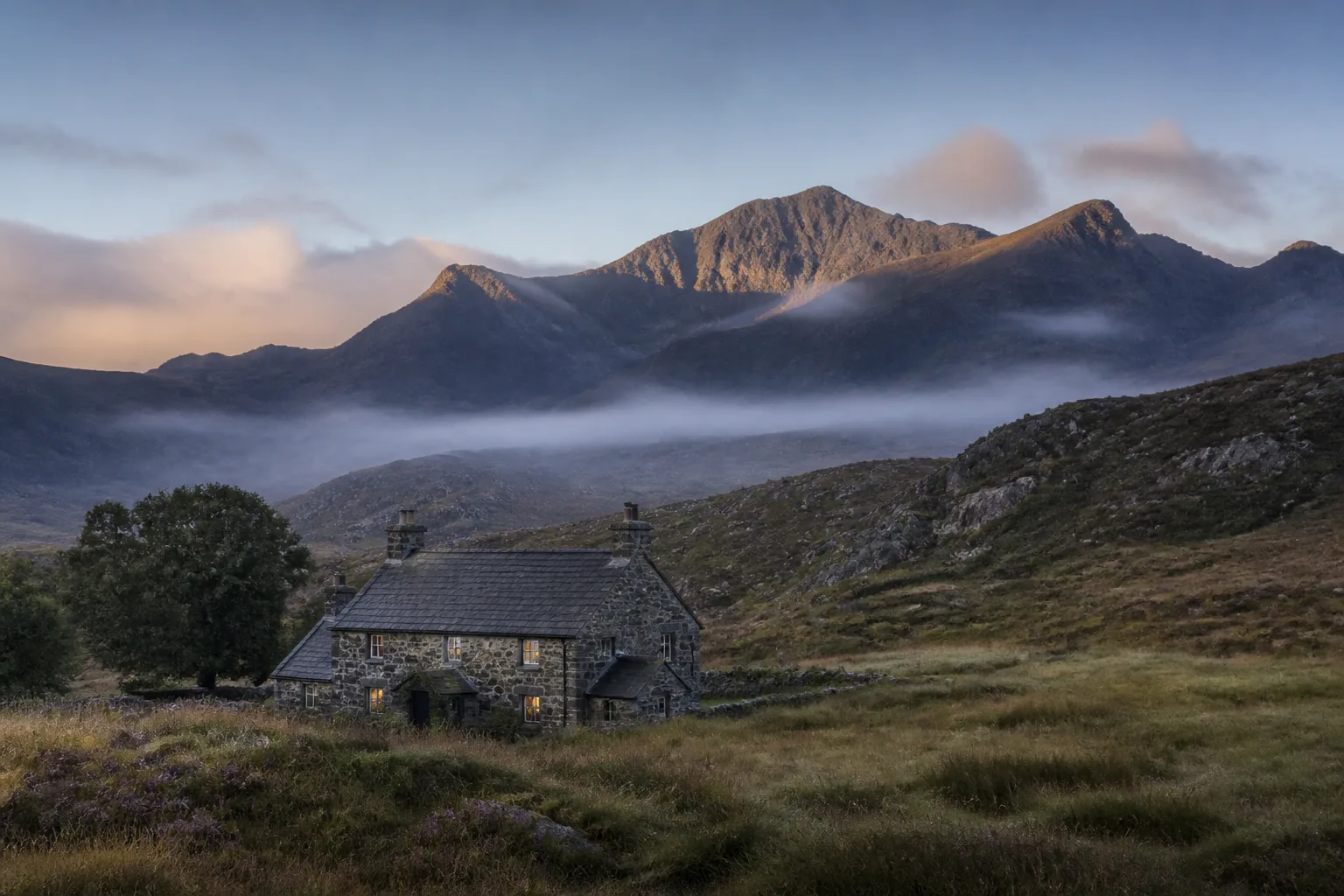
October stays on Northumberland and Cheviots
A cottage near Northumberland and Cheviots
A practical base for the hills
Check dates for an indicative priceExact October prices and availability are checked after you choose a week.Typical mountain and low-level wind, temperature, rainfall and sunshine for October.
Historically, October has been one of the more promising parts of the year for high-ground days. Of 1,240 representative high-ground days, 48% were settled for rain and wind, 43% were mixed, and 9% were poor or severe for rain and wind.
Dry days accounted for 60% of the sample. Across the whole year, the settled-day share is 50%, with around 152 wet days, so a region's strongest month should not be mistaken for its usual climate. As a separate check, the Met Office 1991–2020 average at Berwick-on-tweed is 104 hours of bright sunshine during October. Cloud and views are deliberately kept out of the settled-day score because they vary sharply between individual summits; check the live forecast nearer the trip. These figures describe representative high ground around 815 metres, so coastal and low-level conditions can be milder.
A practical base for the hills
Check dates for an indicative priceExact October prices and availability are checked after you choose a week.Saturday dates are highlighted because they usually unlock the widest choice of seven-night cottage stays. Other arrival days still work.
Across 280 comparable historical hill days, 56% were settled for rain and wind and 5% were poor or severe for rain and wind.
Check the live Northumberland and Cheviots forecast →October context: 48% of days across the month were settled for rain and wind; 9% were poor or severe for rain and wind. Read the full October guide.
Wooler, at roughly 55 metres, provides a practical low-level reference for Northumberland and Cheviots. Across 1,240 historical days, the typical daytime high was 13.0°C, with warmer days around 15.3°C.
About 59% of days were dry and 49% combined dry weather with lighter winds. Conditions vary across glens, coasts and villages, so this should be used as regional trip-planning guidance rather than a forecast for every location.
Each month has a detailed guide comparing high-ground hill days with typical conditions at a representative valley or low-level trip base.
These are the six week bands with the largest historical share of settled rain-and-wind days. Views are not included; use the live forecast nearer the trip.
The comparison uses the whole year, rather than putting each region's single best month beside another's typical conditions.